

Guadalupe-Lompoc Initiative
The Guadalupe-Lompoc Climate Action Initiative (GLI) is a two and half year collaborative effort that launched in Summer 2024. GLI supports community-serving organizations and local governments across Santa Barbara County and the Central Coast region with capacity building, planning, project development, and community engagement so they can address air quality, extreme heat, water supply, food security, and wildfire risk.
The Guadalupe-Lompoc Initiative is a project of the Santa Barbara County Regional Climate Collaborative, and is administered by the Community Environmental Council.
ABOUT
Initiative Background
In 2022, the County led a multi-stakeholder effort to apply for the State's Regional Climate Collaboratives grant in hopes of increasing North County community’s capacity for climate action and participation in the Collaborative. Although the application was not awarded, in 2023, Senator Limón sought a member allocation for the $1.6 million to support the initiative as she saw the benefit it could provide for Santa Barbara County. In July 2024, the Community Environmental Council executed its agreement with the California Natural Resource Agency to administer the funds and launch the Guadalupe-Lompoc Climate Action Initiative (GLI).
Initiative Objectives
-
Peer-To-Peer Resources Sharing for Climate Action
-
Lompoc Groundwater Percolation Basin Feasibility Study
-
City of Guadalupe Climate Action Plan
-
Identify Lompoc Climate Resilience and Adaptation Projects to add to the Regional Priority Plan
-
Climate Resilience Education Expansion
-
Regional Food Resilience Learning Initiatives
-
Regional Air Quality and Extreme Heat Resilience Learning Opportunities

GLI Partners

Collective Cultures Creating Change - Lompoc (C4) is a grassroots coalition that is committed to raising awareness surrounding marginalized populations, challenging inequities, and creating collective efforts for systemic change. More about C4.
Community Environmental Council (CEC) is a regional non-profit developing and scaling solutions to the climate crisis. CEC partners with local communities and stakeholders, engages in strong networks and coalitions, and builds the capacity for communities and local governments to advance climate resilience in plans, policies, projects, programs, staffing, and elected leadership. More about CEC.
The Central Coast Climate Collaborative (4C) is a regional network of over 45 organizations including local and state governments, community groups, tribal nations, businesses, academia, and non-profit organizations with the common goal of working together for a resilient, equitable Central Coast. More about Central Coast Climate Collaborative.
Children and Family Resource Services, in partnership with the Santa Barbara County Promotores Network utilize native language, cultural fluency and popular education techniques to engage non-English speaking residents. As community-based outreach workers, they leverage their personal and social networks to disseminate information, share resources and solicit input and feedback from residents who typically are not able or willing to participate in more formal outreach and engagement activities (such as workshops and websites). More about Children and Family Resource Services.
The City of Guadalupe’s Public Works Department provides for the health, safety, and comfort of Guadalupe residents, businesses, and visitors. The mission of the department is to meet the essential needs of the City in the most efficient and economical manner possible. More about the City of Guadalupe.
The City of Lompoc is a full-service city, providing the community with public needed services such as fire protection, police, and library. Lompoc also maintains its own electrical, water, wastewater, storm water and solid waste utility services for residents and businesses within the city. More about the City of Lompoc.
The Guadalupe-Nipomo Dunes Center promotes the conservation and restoration of the Guadalupe-Nipomo Dunes ecosystem through education, research and the support of cooperative stewardship. More about the Dunes Center.
The Santa Barbara County Wildfire Resilience Collaborative, housed within Cachuma Resource Conservation District, is a multi-stakeholder collaborative network working to create a more fire adapted community. The collaborative seeks to protect and enhance communities, natural resources, and habitats by building capacity, strengthening and expanding wildfire preparedness, mitigation, response, and recovery. This includes advancing projects that restore our natural ecosystems that help reduce fire risks. More about Santa Barbara County Wildfire Resilience Collaborative.
The County Sustainability Division collaborates regionally to facilitate and implement equitable climate policies, programs, and projects that empower communities and improve quality of life. Administered by the County Sustainability Division, The Santa Barbara County Regional Climate Collaborative's purpose is to build local capacity to advance regional scale solutions to the climate crisis and enhance resilience. Learn More.
PROJECTS
Collective Cultures Creating Change - Lompoc
Collective Cultures Creating Change is working to overcome food insecurity by expanding vegetable gardens and creating food forests. They are building food and native plant gardens, delivering educational materials and programs to help expand home gardens, and training a network of youth advocates.
Contact: Raymond Segovia, raymond@c4lompoc.org


Community Environmental Council
The Community Environmental Council will organize outreach, education, and community planning to support the expansion of the Guadalupe Farmers Market, Guadalupe Community Air Project & "Breathe Better, Live Better" campaign, and management of the Land Stewardship Committee. Additionally, they will design and publish communications and educational resources on air quality, extreme heat, and pesticide exposure across three languages.
Contact: Dominique Aranda, Climate Programs Associate, d.aranda@cecmail.org
City of Lompoc
The City of Lompoc is conducting a feasibility study for a water percolation basin throughout the three management areas of the Santa Ynez River Valley Groundwater Basin. This study will evaluate the potential for improving groundwater recharge, stormwater capture, and overall water management in the region.
Contact: Steven Valle, s_valle@ci.Lompoc.ca.us, Senior Administrative Analyst, City of Lompoc


Children and Family Resource Services & Santa Barbara County Promotores Network
The Children and Family Resource Services, in partnership with Santa Barbara County Promotores Network, are supporting community outreach activities for the GLI. Promotores are trained, trusted community health workers who conduct outreach and education activities in Spanish and Mixteco to increase awareness and engagement with local planning & community initiatives.
Contact: Namino Glantz, nglantz@sbceo.org, Program Manager, Health Linkages
Central Coast Climate Collaborative
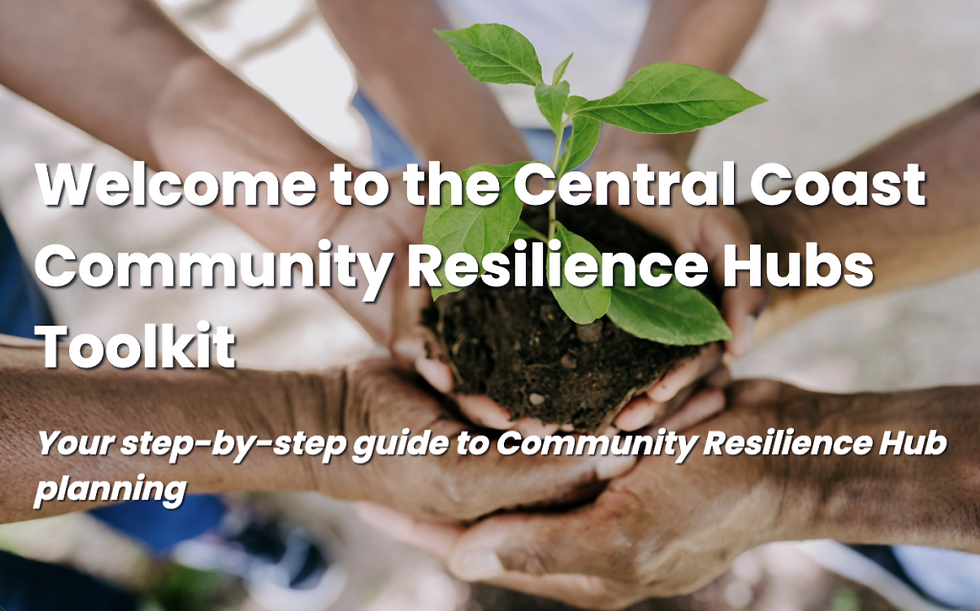
The Central Coast Climate Collaborative (4C) is a six county wide collaborative. The focus of 4C is to support regional transformative climate investment on the Central Coast. For GLI, the 4C will host biannual grant funding workshops for 4C members, plan the Central Coast Climate Resilience Symposium with UC Santa Barbara, UC Santa Cruz, and Resilient Cities Catalyst, and publish a Central Coast Resilience Hub Toolkit.
Contact: 4C Admin Team , centralcoastclimate@gmail.com

Guadalupe-Nipomo Dunes Center & Guadalupe Business Association
The Guadalupe-Nipomo Dunes Center & Guadalupe Business Association plan to deliver climate change education to youth and adults, grow and expand the Guadalupe Farmers Market, and explore the feasibility of an ecotourism hotel or hostel.
Contact: Erika Weber, director@dunescenter.org, Executive Director, Guadalupe-Nipomo Dunes Center, and Garret Matsuura, garret@arclightmedia.com, Arclight Media/GBA/GCON
City of Guadalupe
The City of Guadalupe, in a working partnership with the County of Santa Barbara, is developing a Climate Action Plan (CAP) to reduce the community’s carbon emissions and enhance its climate resilience. A CAP would help the City achieve one of its General Plan tasks and support its ability to receive future climate funding. Learn more here
Contact: Cornelius Nuworsoo, delapide@outlook.com, De Lapide & Associates, Inc.


Cachuma Resource Conservation District & Wildfire Resilience Collaborative
The Wildfire Resilience Collaborative (WRC) is a program under the Cachuma Resource Conservation District. The WRC has been working in the County to identify “shovel-ready” projects that reduce fire risk. They are focused on identifying community priorities for wildfire and climate resilience projects in the Lompoc Valley. They plan to incorporate these community priority projects into a Community Wildfire Protection Plan to better position projects for future funding.
City of Guadalupe
The City of Guadalupe, in a working partnership with the County of Santa Barbara, is developing a Climate Action Plan (CAP) to reduce the community’s carbon emissions and enhance its climate resilience. A CAP would help the City achieve one of its General Plan tasks and support its ability to receive future climate funding. Learn more here
Contact: Cornelius Nuworsoo, delapide@outlook.com, De Lapide & Associates, Inc.
Cachuma Resource Conservation District & Wildfire Resilience Collaborative
The Wildfire Resilience Collaborative (WRC) is a program under the Cachuma Resource Conservation District. The WRC has been working in the County to identify “shovel-ready” projects that reduce fire risk. They are focused on identifying community priorities for wildfire and climate resilience projects in the Lompoc Valley. They plan to incorporate these community priority projects into a Community Wildfire Protection Plan to better position projects for future funding.
Santa Barbara County Regional Climate Collaborative
The County of Santa Barbara and the Santa Barbara County Regional Climate Collaborative will plan and manage the GLI Coordinating Committee, website, and quarterly newsletter. They will also plan and implement an annual in-person convening for GLI grant partners and Collaborative members to learn and network.
Contact: Malia Josephine, mjosephine@countyofsb.org, Climate Program Specialist, County of Santa Barbara

Communications Archive
RESOURCES
Events Archive
Our Four Functions
April, 2026
-
Momentum in Bloom: Spring Updates from the Guadalupe-Lompoc Initiative
-
Impulso en Flor: Actualizaciones de Primavera de la Iniciativa Guadalupe-Lompoc
January, 2026
October, 2025
-
Celebrate Community this Fall: Booth with us at Day in the Park
-
Celebrando a la Comunidad este Otoño: Acompáñanos con un Puesto en el Día en el Parque
July, 2025
April 2025
January 2025
-
Shape Climate Resilience in Santa Barbara County: Apply for the GLI Committee!
-
Contribuye a la Resiliencia Climática en el Condado de Santa Bárbara: ¡Aplica para el Comité GLI!
October 2024
-
Coming Soon!
Coming Soon!
Coming Soon!
